Boost Your App
Please fill in the form below and we'll call you back in no time.
Your request has been received! We'll be in touch shortly
Oops! Something went wrong while submitting the form.

Instruction-memo for visual ASO

CRO
App Store Optimization
Apr 22, 2026

When users search for an app based on its features rather than its brand name, the visual elements often become the deciding factor in whether they install it.

Graphic ASO involves optimizing all visual elements on app store listing pages. Its primary goal is to increase the conversion rate from views to installs.

In this article, we’ll cover the latest technical specifications and best practices for the App Store and Google Play that will help your app pass moderation and stand out from the competition.

Join the open ASO & User Acquisition community on Discord - ASO Busters! Here, engage in insider discussions, share insights, and collaborate with ASO and UA experts. Our channels cover the App Store, Google Play, visual ASO, ASA, UAC, Facebook, and TikTok.

App Store Graphics Optimization

When optimizing iOS apps, an ASO specialist works with the following visual elements:

  1. Icon.
  2. Screenshots.
  3. Cover (Page artwork).
  4. Video (App preview).
  5. Video banner (Preview poster frame).
More on the role of visual design: Visual ASO: Graphic Composition and How You Can Use It

Icon

The icon is the primary visual element — the starting point that must convey the essence of the product within the first few seconds.

Key rules for icon design to help you avoid mistakes:

  1. Create a design that catches the eye and is easy to remember.
  2. Stay true to your niche, but make your product stand out from competitors.
  3. Don’t overload the image with small details.  
  4. The graphic element should clearly convey the main purpose of your app.
  5. Check how the icon looks on different backgrounds and in different color schemes.
  6. In the App Store, you can use only one icon for all locales.
  7. Using a Call to Action (CTA) in the image is strictly prohibited.
  8. Do not include the brand name if it is not well-known.
11 secrets to making your app icon stand out and distinguish itself from the competition

App Store Technical Requirements for App Icons

To ensure your app icon displays correctly in the App Store, the icon image file must meet the following criteria:

  • File format — PNG.
  • Colors — P3 (extended color palette), sRGB (color space), or Gray Gamma 2.2 (for grayscale) profiles are supported; color accuracy should be verified according to Apple’s official guidelines.
  • Layers — Flattened into a single layer, with no transparency.
  • Shape — A square without rounded corners; the system will round them automatically.

Resolution — Varies depending on the device; before exporting, check the current size chart in Apple’s developer documentation.

Icon sizes

Each ap should include 2 icons:

  1. A largericon, displayed in the App Store:
Device or context Icon and pixels size File name
iPhone 120x120 Icon-60@2x.png
180x180 Icon-60@3x.png
iPad 76x76 Icon-76.png
iPad Pro 167x167 Icon-83.5@2x.png
App Store 1024x1024 iTunesArtwork@2x

  1. A smaller icon, displayed on the device after installing the app:
Device Spotlight icon size and name Settings icon size
iPhone 120x120 Icon-Small-40@3x.png 87x87 Icon-Small@3x.png
80x80 Icon-Small-40@2x.png/td> 58x58 Icon-Small@2x.png
iPad Pro, iPad, iPad mini 80x80 Icon-Small-40@2x.png 58x58 Icon-Small@2x.png

Screenshots

The most prominent visual elements on an app listing page. They convey the essence of the product to users more effectively than a text description.
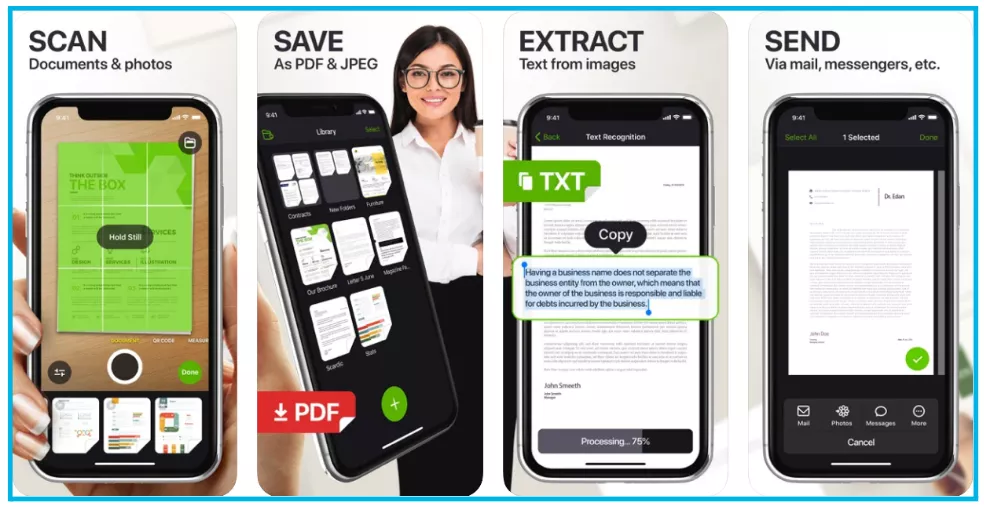
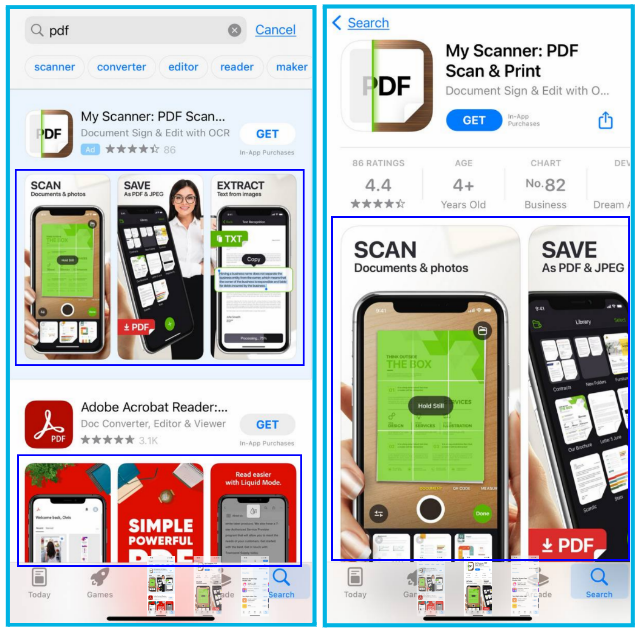
General screenshot requirements in the App Store:

  • You may upload between 1 and 10 screenshots.
  • Screenshots can be in either portrait or landscape orientation.
  • You can add different screenshots for different devices and locales.
  • Apple recommends focusing on the actual user experience—showcase key screens of the app interface or gameplay dynamics.
  • All images must strictly comply with Apple’s content policy.
Important: In search results, users see either one horizontal image or three vertical ones. On the app listing page, they see approximately 1.5 vertical screenshots at a time.

Screenshot Sizes

Device size Screenshot size Comment
66.9 inch (iPhone Air, iPhone 17 Pro Max, iPhone 16 Pro Max, iPhone 16 Plus, iPhone 15 Pro Max, iPhone 15 Plus, iPhone 14 Pro Max) 1260 x 2736 pixels (portrait)
2736 x 1260 pixels (landscape)
1290 x 2796 pixels (portrait)
2796 x 1290 pixels (landscape)
1320 x 2868 pixels (portrait)
2868 x 1320 pixels (landscape)
6,5 inch (iPhone 14 Plus, iPhone 13 Pro Max, iPhone 12 Pro Max, iPhone 11 Pro Max, iPhone 11, iPhone XS Max, iPhone XR) 1284 x 2778 pixels (portrait)
2778 x 1284 pixels (landscape)
1242 x 2688 pixels (portrait)
2688 x 1242 pixels (landscape)
Required if the app runs on an iPhone but no screenshots are provided for the 6.9-inch display.

If screenshots with the required dimensions are not provided, scaled versions will be used for 6.9-inch displays.
13 inch (iPad Pro (M5), iPad Pro (M4), iPad Pro (6th generation, 5th generation, 4th generation, 3rd generation, 1st generation), iPad Air (M3, M2)) 2064 x 2752 pixels (portrait)
2752 x 2064 pixels (landscape)
2048 x 2732 pixels (portrait)
2732 x 2048 pixels (landscape)
Required if app runs on iPad
12.9 inch (iPad Pro (2nd generation)) 2048 x 2732 pixels (portrait)
2732 x 2048 pixels (landscape)
If screenshots of the required size are not provided, scaled versions will be used for 13-inch displays.
Please check the current screenshot dimensions and specifications against Apple's official documentation.

App Cover

Displayed on the app’s listing page and the developer’s page in the App Store.

According to Apple’s guidelines, the following rules should be followed when preparing the cover:

  • Choose a visual design that will remain relevant for at least six months, as replacing the cover is a complex process that requires additional time for review.
  • Resolution: 4320 x 1080 pixels.
  • File type: PSD. To upload to the system, the file must be compressed into a ZIP archive.
  • Naming convention: AppName_AppAppleID_YYYYMMDD_AppStore_ProductPage_DeveloperPage.

Video

VA video clip is always displayed first. However, it is not a one-size-fits-all solution—you should determine its effectiveness through testing. For games, including gameplay footage typically leads to a significant increase in conversion rates, as it effectively showcases the game’s dynamics and mechanics. For apps, video does not always perform well. In some cases, static screenshots with clear messaging deliver better results than video.

You can use a separate video for each locale, but keep the following in mind:

  • A video uploaded to the primary locale will be displayed in all locales.
  • A video uploaded to a secondary locale will only be shown in that specific locale.

Basic video requirements:

  1. If you use a landscape video alongside portrait screenshots, users will first see the landscape video in search results, while on the app page, the video will appear below the portrait images.
  2. Video length should be between 15 and 30 seconds.
  3. The App Store allows you to upload up to three videos, but users rarely watch more than one clip, typically focusing on the first 7–11 seconds.
  4. It is recommended to show the user interacting directly with the interface. The video should be as informative as possible and demonstrate real functionality.
  5. Showing commercials, devices, or people holding devices is prohibited.
Tip: Before final rendering, make sure to check Apple’s latest technical specifications for resolution and frame rate, and review the official guidelines for creating App Store videos.

Banner

A still frame from the video is used as the banner. There is no need to upload a separate image—the system lets you select the most suitable frame directly in App Store Connect when setting up the video.

In most cases, the video plays automatically; however, there are situations where the user will see only the frame you have selected.

The video banner will not auto-play (and the banner will be displayed instead) in the following situations:

  • Auto-play for video content is disabled in the device settings.
  • The internet connection is weak.
  • The device is in low-battery mode.
  • Another video is already playing in the feed.

Graphic Optimization for Google Play

Graphic Optimization for Google Play

For Android apps, the specialist’s main focus is on preparing and testing the following visual elements:

  1. Icon.
  2. Screenshots.
  3. Banner (Feature graphic).
  4. Video.

Icon

The key visual element that shapes the first impression of an app on both Google Play and the App Store.

When searching, users see many icons at once, so it’s important to stand out from the competition and grab attention, while still maintaining harmony with other icons in the category.

Google Play’s technical requirements and restrictions for icons:

  • Image — 32-bit PNG with an alpha channel (image transparency data).
  • Dimensions — 512 × 512 pixels.
  • Color — sRGB.
  • Shape — Perfect square; the system will automatically round the corners.
  • Maximum file size — must not exceed 1024 KB.
  • You can upload unique icon variants for each app listing page locale.

The icon must comply with Google Play design specifications. The following are not permitted:

  • Calls to action urging users to download the app or providing information about prices and discounts.
  • Display of ratings.
  • Information that may mislead users.
  • Badges or icons implying participation in Google Play programs (e.g., Play Pass, Editors’ Choice).

Screenshots

These are important visual elements that influence conversion. They are displayed mainly on the app listing page rather than directly in search result

Key requirements:

  1. Google does not require all images to be the same size, but specifications must be followed. 
  2. You can include up to eight screenshots in any orientation for different devices.
  3. Formats: JPEG or 24-bit PNG without an alpha channel.
  4. Dimensions: Minimum 320 pixels, maximum 3840 pixels.
  5. The primary focus should be on the user’s actual interaction with the product.
  6. Google allows stylized screenshots with additional graphic design, but the first three images must show the actual app interface or gameplay.
  7. The following are prohibited: ratings, reviews, awards, discounts, or any promotions.
  8. Avoid using words like “Best,” “#1,” “Top,” “New,” “Discount,” “Sale,” “Million Downloads,” etc.
  9. Do not use phrases such as “Download now,” “Install now,” or “Play now” to encourage users to install the app.

Banner (Feature Graphic)

Its main purpose is to highlight the product effectively among competitors, convey an emotional message, and attract attention.

A banner is displayed in the following situations:

  • As the cover image if there is a video on the app page.
  • In curated lists, recommendations, themed collections, and ad placements (e.g., Google Ads campaigns).

Key requirements for banner design according to Google’s guidelines:

  1. Format — JPEG or 24-bit PNG without an alpha channel.
  1. Dimensions — 1024 x 500 pixels.
  2. The image should instantly convey the essence and main benefit of your product.
  3. Do not duplicate the app icon on the banner, as it is always displayed next to it.
  4. Avoid small details and text overload.
  5. Adapt graphics and text for each locale to increase user engagement and loyalty.
  6. Do not use elements that quickly become outdated. For seasonal banners (e.g., Christmas), plan to update them back to the standard version immediately after the event ends.
  7. Use a consistent color scheme and fonts across the icon, screenshots, and banner.

Video

While a video is not mandatory on Google Play, it is one of the most effective tools for showcasing the key features of your app or game in action.

Basic requirements for video previews:

  1. Unlike the App Store, videos are not uploaded directly to Google Play. You need to upload the video to YouTube and provide a link to it.
  2. The landscape format is the preferred option, as the video will play in a landscape player. 
  3. A video added to the primary locale will automatically appear in all app listing page locales.
  4. Localize the video to display it in different languages.
  5. Do not include advertisements or monetization elements in the video.
  6. Content must not contain age-restricted material (unless it matches the app’s own rating).
  7. Autoplay lasts 30 seconds, but the most important features should be shown within the first 10 seconds to capture the user’s interest. 
  8. Adding subtitles is recommended so the content remains understandable without audio.
To create a high-quality screen capture, refer to Google’s official guidelines on video technical specifications.

Traffic
Popularity
Keyword
1
385 585
99
instagram
2
325 480
98
whatsapp
3
201 485
95
telegram
4
177 737
94
facebook
5
119 067
91
tik tok
6
92 427
90
ifood
7
80 473
87
tinder
8
69 379
87
capcut
9
65 120
87
nubank
10
64 602
86
uber

Conclusion

The App Store and Google Play differ fundamentally in how they display screenshots: on the App Store, screenshots are visible immediately in search results, whereas on Google Play, they typically appear only on the app’s listing page.

What to focus on regardless of the platform:

  1. First impressions matter: You have only 7–11 seconds of video and the first three screenshots to capture the user’s interest. Highlight the most important features at the beginning, as the rest may go unnoticed.
  2. Show real interactions: Demonstrate real-life interactions with the product rather than promotional collages. This is both a store requirement and a matter of user trust.
  3. Localize thoughtfully: Don’t just translate the text in screenshots; adapt visuals to the cultural context of each country.
  4. Leverage localization features: Both platforms allow separate graphic assets for each locale—take advantage of this opportunity.
  5. Respect specifications: Follow the current guidelines for dimensions and “safe zones” so that important text isn’t obscured by the store’s interface elements.
  6. Stay up to date: Specifications are updated regularly, so check the official documentation before each release.
Home
Up