To build an ASO strategy that takes into account users’ needs at different stages — from first encountering the product to regular use — the RadASO team uses the See–Think–Do–Care framework.
It helps to segment the audience by level of intent, define promotion goals and select metrics for evaluating results. In this article, I’ll look at how to adapt this approach to ASO and put it into practice.

Marketing has always been a multifaceted and vast field. That is precisely why it is particularly important to structure your work with marketing strategies so as not to get lost in the vast amount of information and possible solutions to a problem, and not to jump to conclusions.
In all areas of marketing – be it SEO, SMM, Paid User Acquisition, etc., and including ASO specialists – it is worth taking a systematic approach to implementing a promotion strategy. The universal ‘See-Think-Do-Care’ framework can assist marketing professionals in their work. It was created by the renowned Google analyst Avinash Kaushik over ten years ago, yet it remains relevant to this day.

It is based on a systematic approach to segmenting the audience by level of intent, and encourages practitioners, once they have been given a specific task, to follow a four-stage principle.
In this variation, the first stage, ‘See’, refers to the moment when a customer first encounters the brand and, as it were, begins to ‘see’ it. The audience here is the broadest. It includes people who do not yet have any commercial intent, but who are nevertheless consumers (or potential consumers) of products similar to those sold by your company.
As an example, Avinash Koshik cites a clothing retailer. Its potential audience at the ‘See’ stage comprises everyone who wears clothes, regardless of whether they are planning to make a purchase. In the context of ASO, these are iOS and Android users (depending on the product’s availability in app stores) who are potentially interested in its features but do not yet have a specific intention to install it.
The second stage is ‘Think’. Following Avinash Koshik’s example, these are people who wear clothes and are considering buying new ones. In the context of ASO, this refers to users who are looking for an app with the features they need, but do not yet see enough benefits to choose a specific product. Therefore, the main task is to demonstrate its value and help the user decide to download it.
The third stage is ‘Do’. According to Avinash Koshik, this stage encompasses people who are already ready to buy new clothes. It is this audience that marketers traditionally regard as their target audience. In the context of ASO, this refers to users who have decided on the type of digital product they need and are ready to install it or take out a subscription.
The final stage, ‘Care’, comprises buyers with whom transactions have already been completed. In other words, in our case, these are app users who have already had some interaction with the app.
In the traditional sense, ASO is often associated primarily with the ‘Do’ stage, as app installs and app page conversions are considered the main outcomes of optimisation.
However, in reality, ASO influences all stages of the See–Think–Do–Care cycle.
Optimising visibility helps introduce the user to the app; graphics and positioning encourage them to consider it; whilst ratings and reviews help boost conversion, which in turn drives downloads. Optimising onboarding and the paywall helps guide the user further after installation and boosts conversion to a target action or subscription. Updates, events and push notifications help maintain contact with existing users, bring them back to the app and encourage further engagement with the product.
Let’s look at how to use the framework using the example of an app for tracking a baby’s feeding and sleeping patterns.
During the ‘See’ phase, the task will be to make the app visible to the relevant audience of parents through category and functional keywords, correct positioning, a clear icon, localisation and other tools that help increase the app’s visibility on Store.
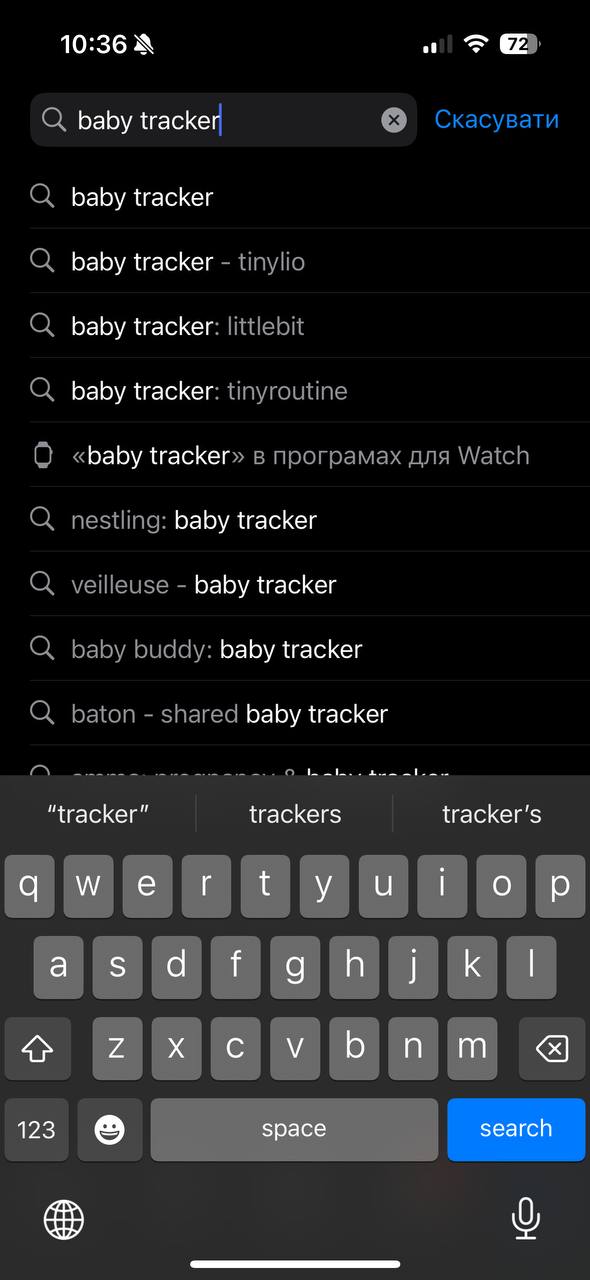
At the ‘Think‘ stage, the user is already aware of their need and begins searching for a suitable solution — for example, ‘baby tracker’, ‘feeding tracker’ or ‘sleep log’ — whilst comparing several products. Therefore, the first screenshots, clear positioning, a demonstration of the app’s key features and benefits, as well as ratings and reviews, will play a key role here.
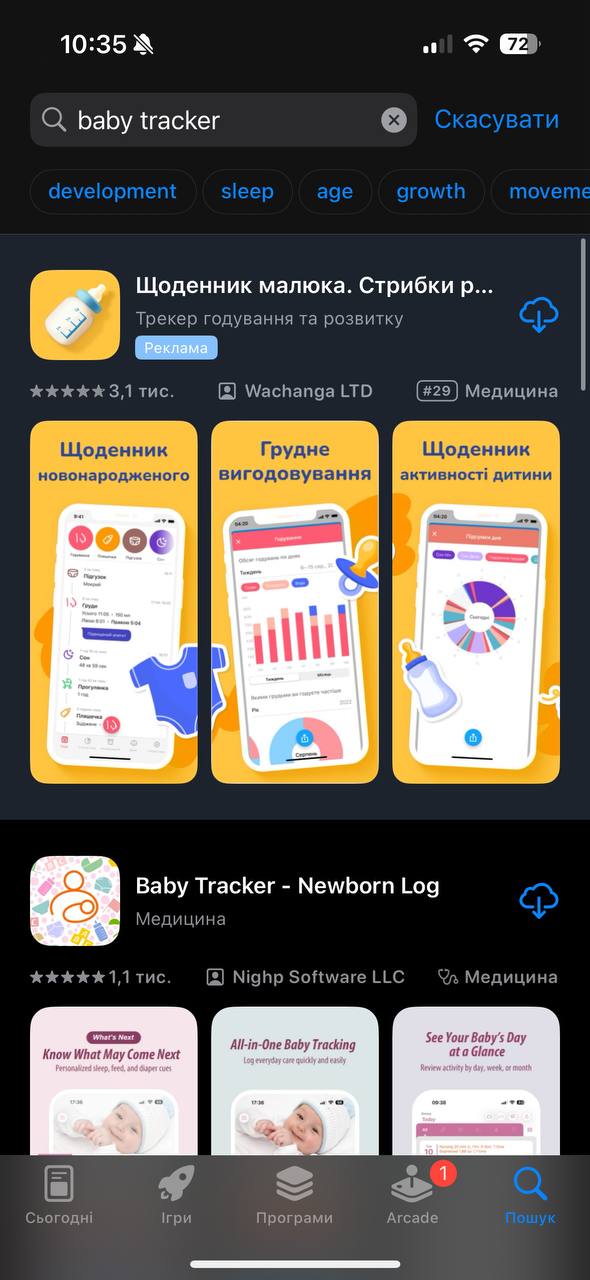
At the ‘Do’ stage, the user is ready to download the app. Here, it is important to remove the final barriers to installation: clearly highlight the product’s benefits, relevant features, and how it matches the search query, and, where necessary, the subscription terms and the availability of a free trial period.

At the ‘Care‘ stage, the main focus shifts to encouraging repeat engagement with current and former users. From an ASO perspective, this involves managing ratings and reviews, updating the app’s store page, communicating about new features, utilising In-App Events and Promotional Content, and making use of other store features that help bring users back and maintain their interest in the product.
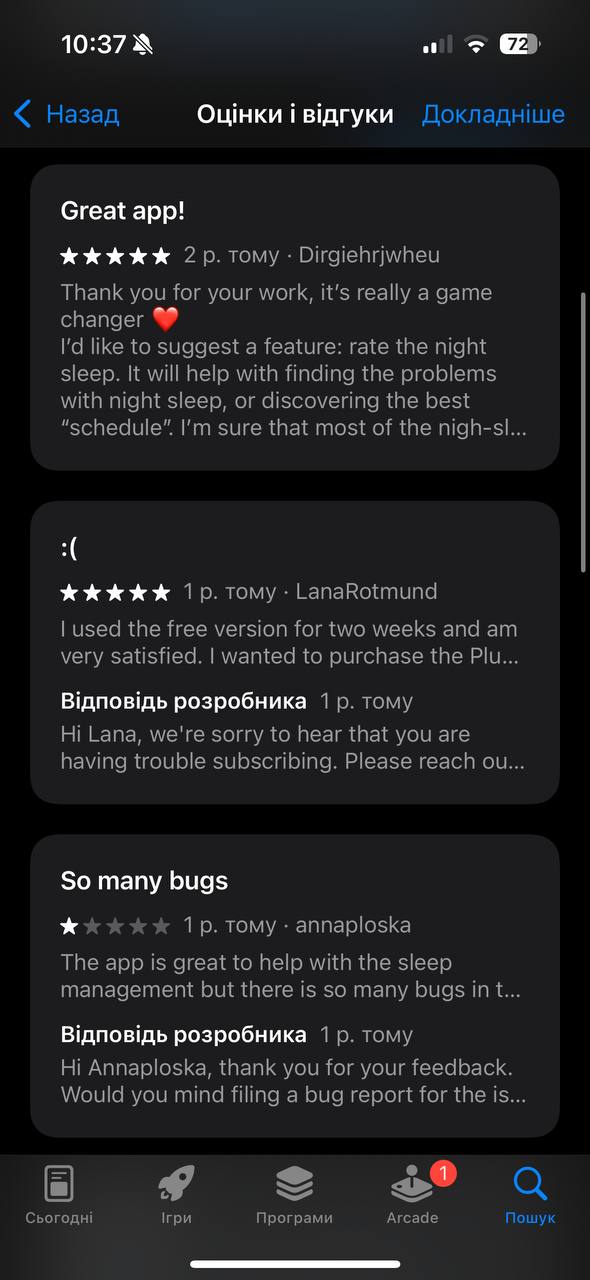
Thus, thanks to the See–Think–Do–Care framework, RadASO specialists view ASO not as a one-off optimisation of the app’s store page, but as a comprehensive system for engaging with users based on their intentions.
This approach helps not only to increase the number of installs, but also to identify exactly where the audience is being lost: why users do not notice the product, do not visit its page, do not install it, or do not return after their first use. This makes it possible to identify problems at various stages of interaction and find opportunities to improve results.
As a result, the ASO strategy becomes structured, measurable and aligned with the product’s overall business objectives.