VPN is one of the most competitive niches in the App Store, where even minor changes to search algorithms can significantly impact app visibility. This was precisely the challenge the RadASO team faced while promoting VPN Guru: On June 6, 2025, a Google update caused the app’s rankings to drop in the U.S. and the U.K.
Despite this, by the end of that same month, the app’s organic impressions had increased by 145%, and installs by 675%, compared to May. In this case study, we’ll explain how the team worked with search terms, optimized metadata, expanded localizations, and tested visual elements to strengthen VPN Guru’s presence in the App Store.
VPNGuru is a commercial virtual private network (VPN) service designed for secure internet browsing, bypassing regional blocks, and protecting traffic.
At the start of the project, our main goals were:
During the project, the algorithms were updated (June 6, 2025), after which sharp fluctuations in app rankings in search results were observed. The update affected rankings in the U.S. and the U.K. In these countries, the number of search terms for which VPN Guru ranked in the Top 50 and Top 10 decreased. We needed to adapt our strategy to the new conditions.
To boost VPN Guru’s organic visibility, the RadASO team focused its efforts on several interconnected areas.
We began by analyzing competitors and forming a keyword list for the U.S. market. In May, the team prepared metadata for the following localizations: English (US, UK), Arabic, Chinese (Simplified), Korean, and Vietnamese. The last four localizations were used to expand keywords coverage in the U.S.
The first metadata update was published on May 20. Following the release, the number of search terms for which the app ranked in the Top 50 increased both in the U.S. and in other markets. Positive trends in estimated visibility were also observed in Mexico, Saudi Arabia, the UAE, Germany, and Vietnam.
In June, the team expanded the keyword list and prepared metadata for English (US), Arabic, Chinese (Traditional), English (Australia), German, Portuguese (Brazil), and Spanish (Mexico). The updates were released on June 3 and 19.
In July, the next set of localizations was prepared: Turkish, French, English (Canada), French (Canada), Russian, and Vietnamese. On July 18, a release took place featuring the metadata prepared in June.
After the metadata iteration, the app began to rank higher.
The first results of the optimization became noticeable right after the May release: the number of search terms in the Top 50 increased both in the U.S. and in other markets. At the same time, in the U.S., the number of keywords in the Top 10 remained roughly at the previous level.
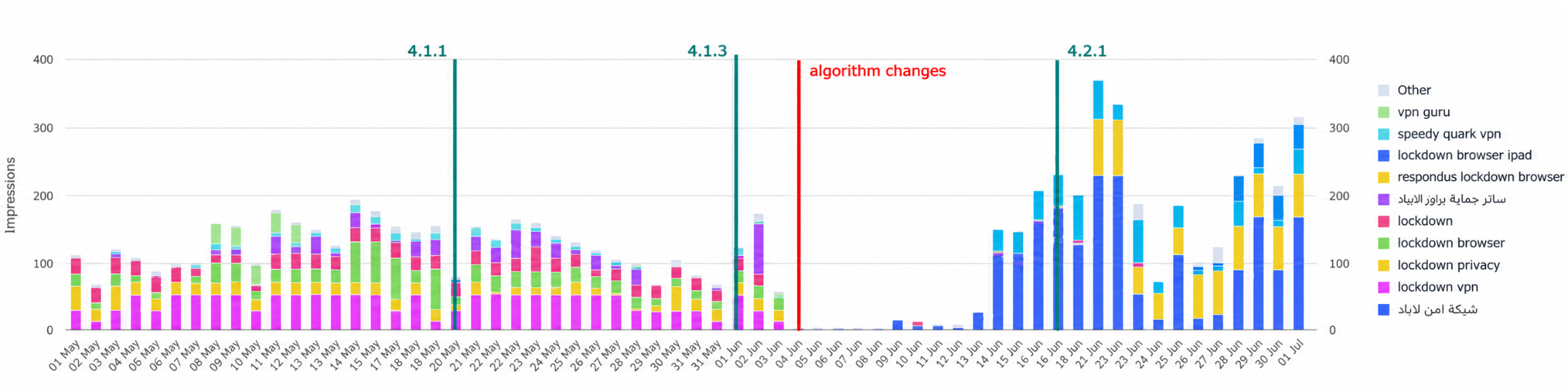
In June, an App Store algorithm update changed the trend. On June 6, the number of rankings in the Top 50 and Top 10 in the U.S. dropped significantly. A similar situation was observed in the United Kingdom. Despite this, in Germany, the number of keywords ranking in the Top 50 and Top 10 continued to grow, while in Brazil, the overall reach of search terms in the Top 50 increased.
Following the update, the team worked simultaneously on regaining rankings in markets affected by algorithmic changes and on improving visibility in other countries.
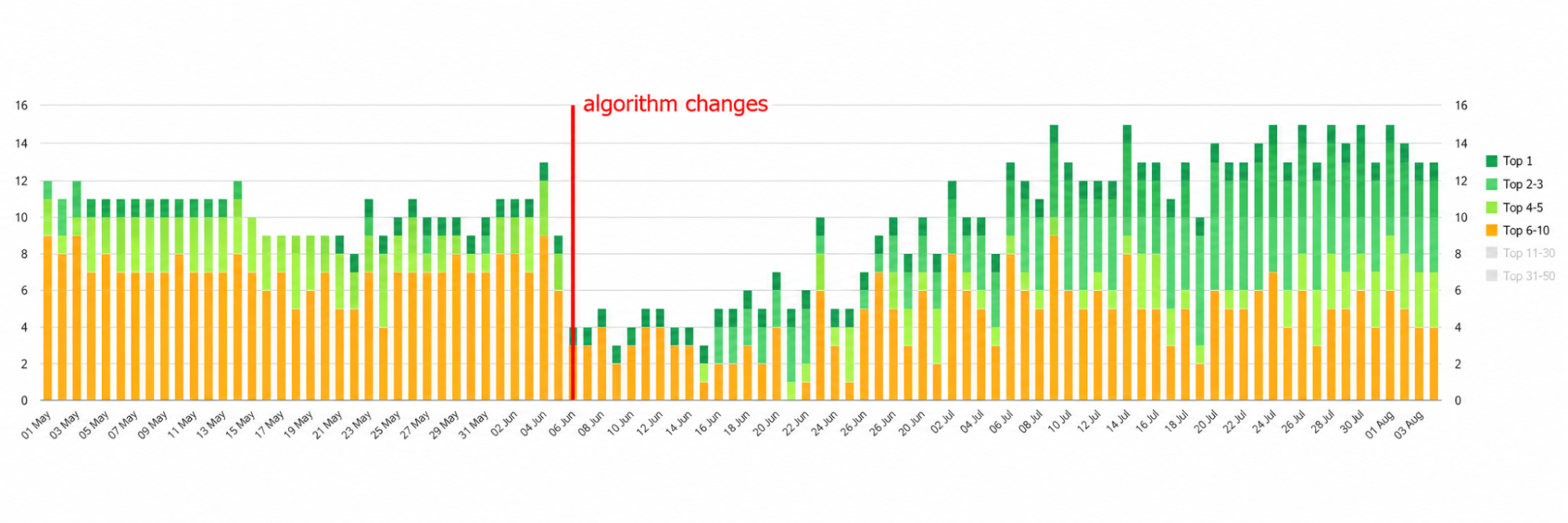
By early August, the number of top-10 keyword rankings in the U.S. had already exceeded pre-algorithm-update levels. At the same time, the total number of top-50 rankings had not yet fully recovered.
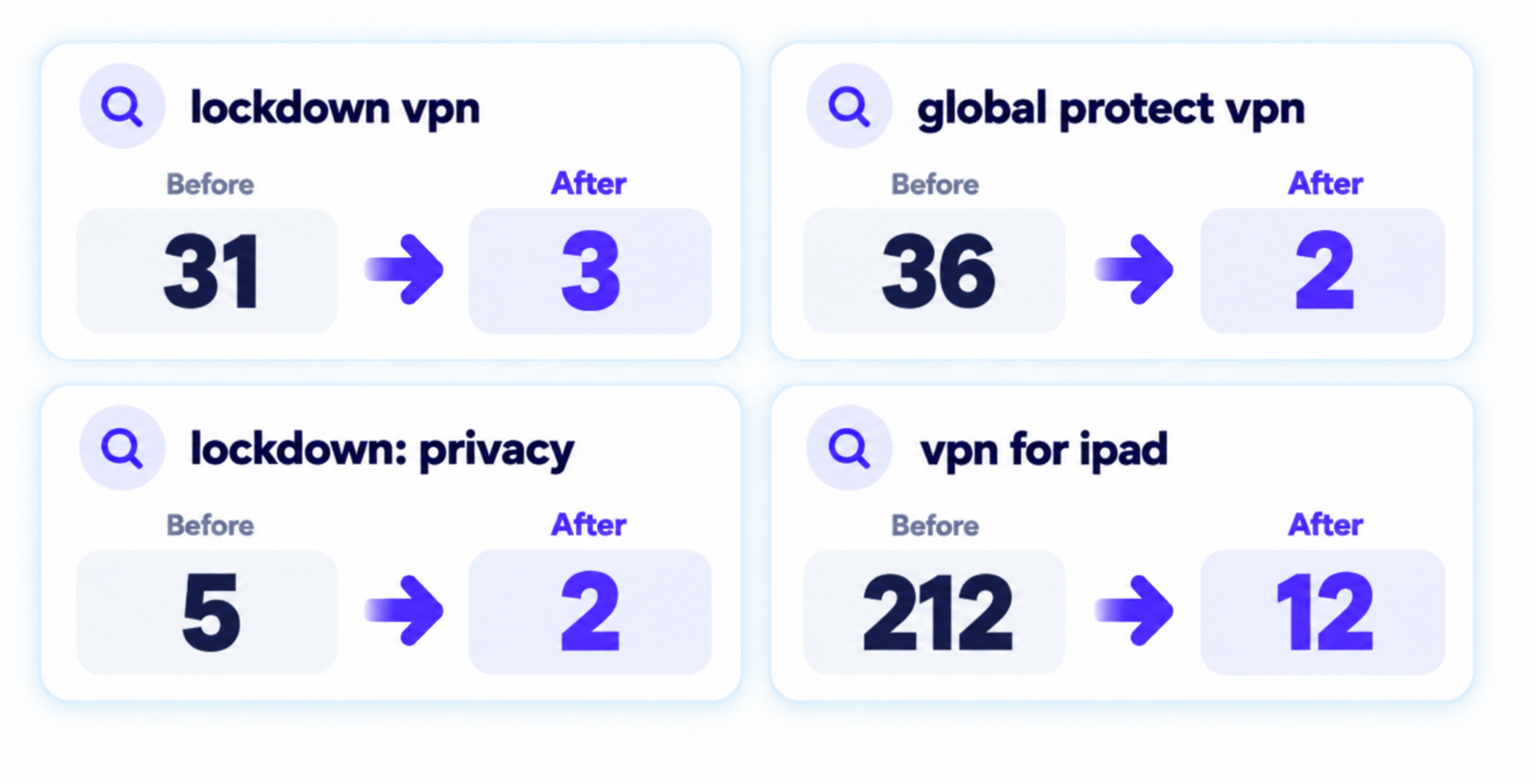
The team regularly analyzed relevant keywords, reviewed their usage in text metadata, and continued optimizing the app’s keyword list. Over the course of this work, we achieved significant improvements in App Store search rankings for a number of priority keywords.
A separate area of focus was optimizing the App Store visual assets in the App Store. Since the brand did not yet have high brand recognition, the team focused on improving the clarity and visibility of the app icon in search results.
In June, two A/B tests of the icons were conducted: from June 12 to 19 and from June 20 to July 1, 2025.
As part of CRO optimization, the team conducted two consecutive A/B tests of the app icon. During the first test, they compared different icon concepts, including a version featuring an power button. Although no statistically significant difference in conversion rates was observed, the icon with the power button showed positive trends throughout most of the testing period.
Based on this result, the team decided to explore this promising concept in more detail. In the second A/B test, they focused on the color scheme of the icon featuring the power-off symbol, comparing different design variations. However, this test also failed to reveal a statistically significant improvement in conversion rates.
Despite the lack of a clear winner, the test results helped identify directions for further CRO optimization. The team formulated two new hypotheses aimed at making the app’s purpose clearer and making the icon stand out more in search results in search results.
To test these hypotheses, we developed new design concepts: an icon featuring a shield and the word “VPN,” and a version with a power button and a more prominent “VPN” label.

Next, the team planned to conduct A/B testing of the updated icon concepts to assess whether clearer visual cues —the “VPN” text and more contrasting color combinations—would help improve the app page’s conversion rate.
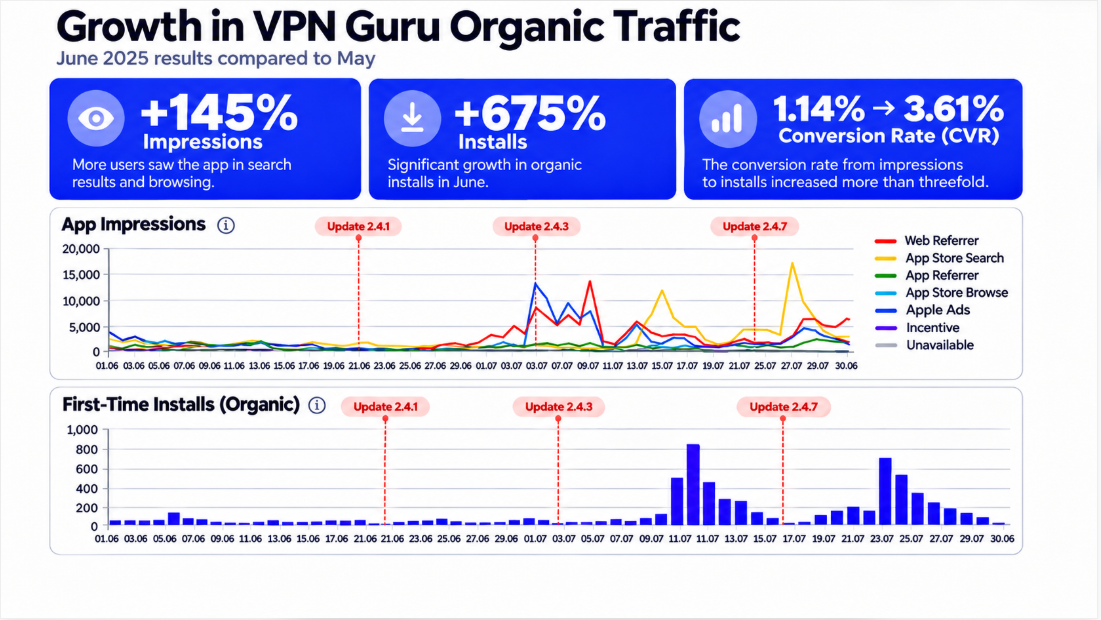
By June, the effects of the ASO optimization were already noticeable. Despite changes to the App Store’s algorithms and a decline in rankings in the UK and US markets, organic traffic continued to grow.
Compared to May, the number of organic impressions increased by 145% in June, organic installs rose by 675%, and the conversion rate grew from 1.14% to 3.61%.
Based on the results of the first three months of work (May–July 2025), the number of top-50 keywords increased across all target markets. The results were particularly notable in the U.S., where the number of top-10 rankings exceeded pre-App Store algorithm update levels. Positive trends were also observed in Germany and Brazil.
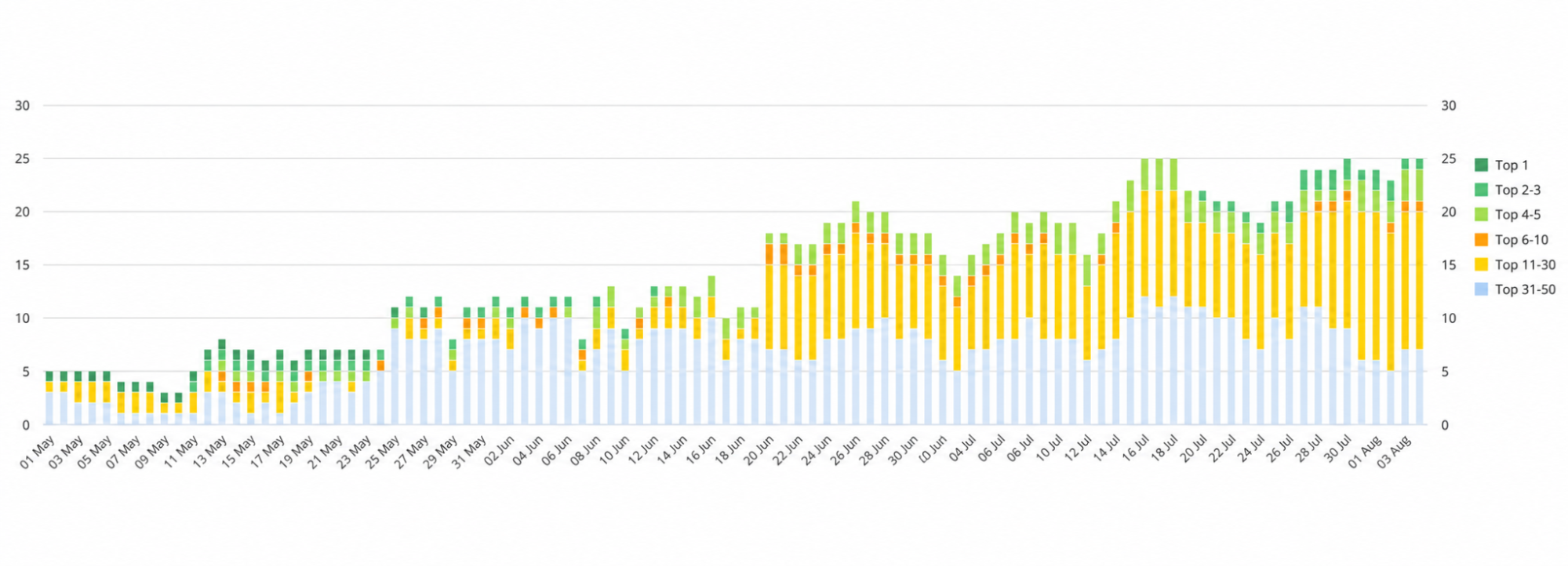
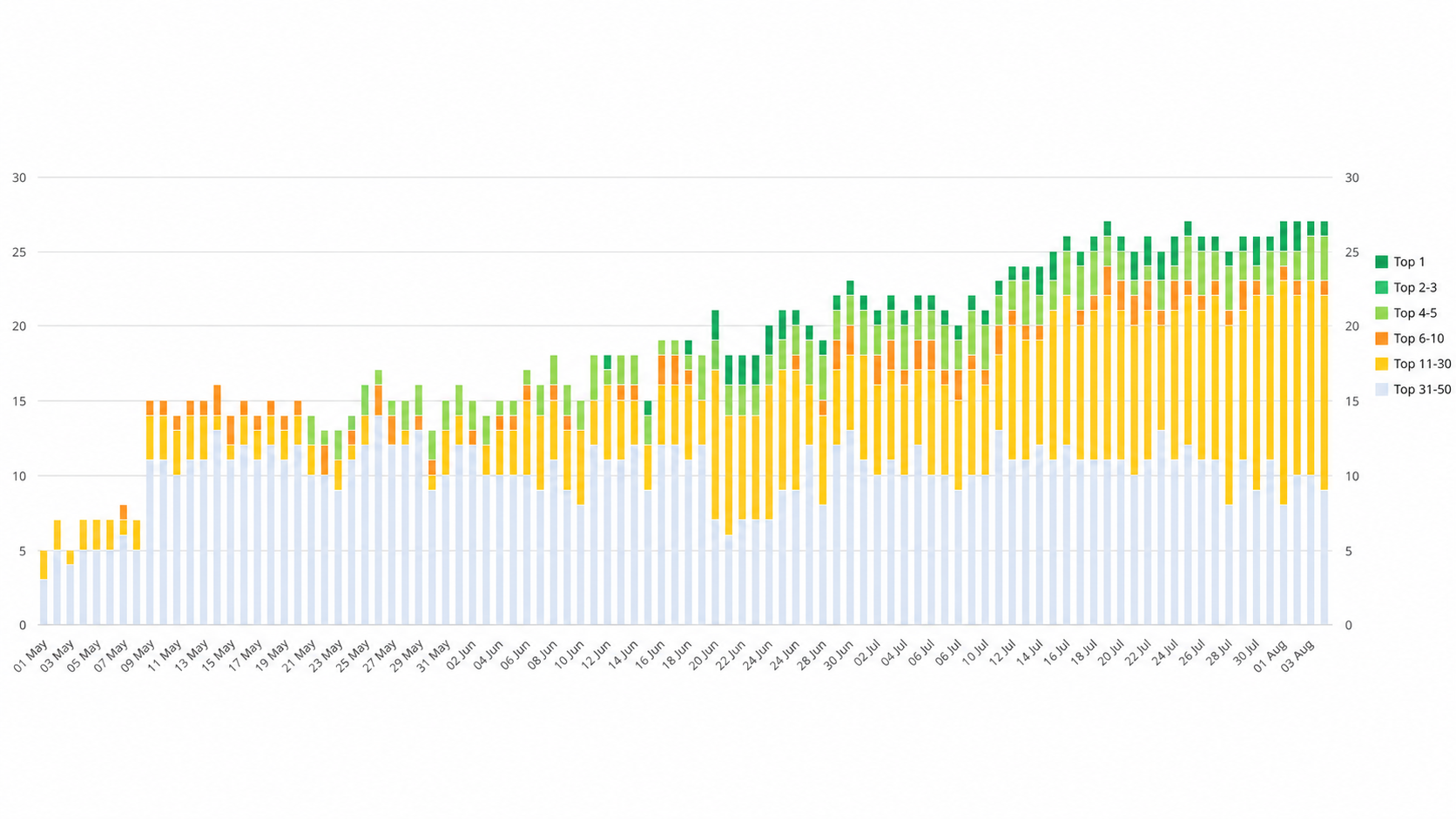
The rise in rankings gradually began to impact organic impressions as well. Over three months of operation, the daily number of organic impressions worldwide—excluding the U.S.—doubled.
As of the end of July, VPN Guru’s estimated search visibility in the U.S. stood at approximately 580 Estimated Daily Impressions per day. The majority of this figure came from search terms where the app had strengthened its rankings.

Along with visibility, the number of first-time downloads also increased. Over three months, daily first-time downloads worldwide (excluding the U.S.) rose from 12–18 to 40–50 per day.
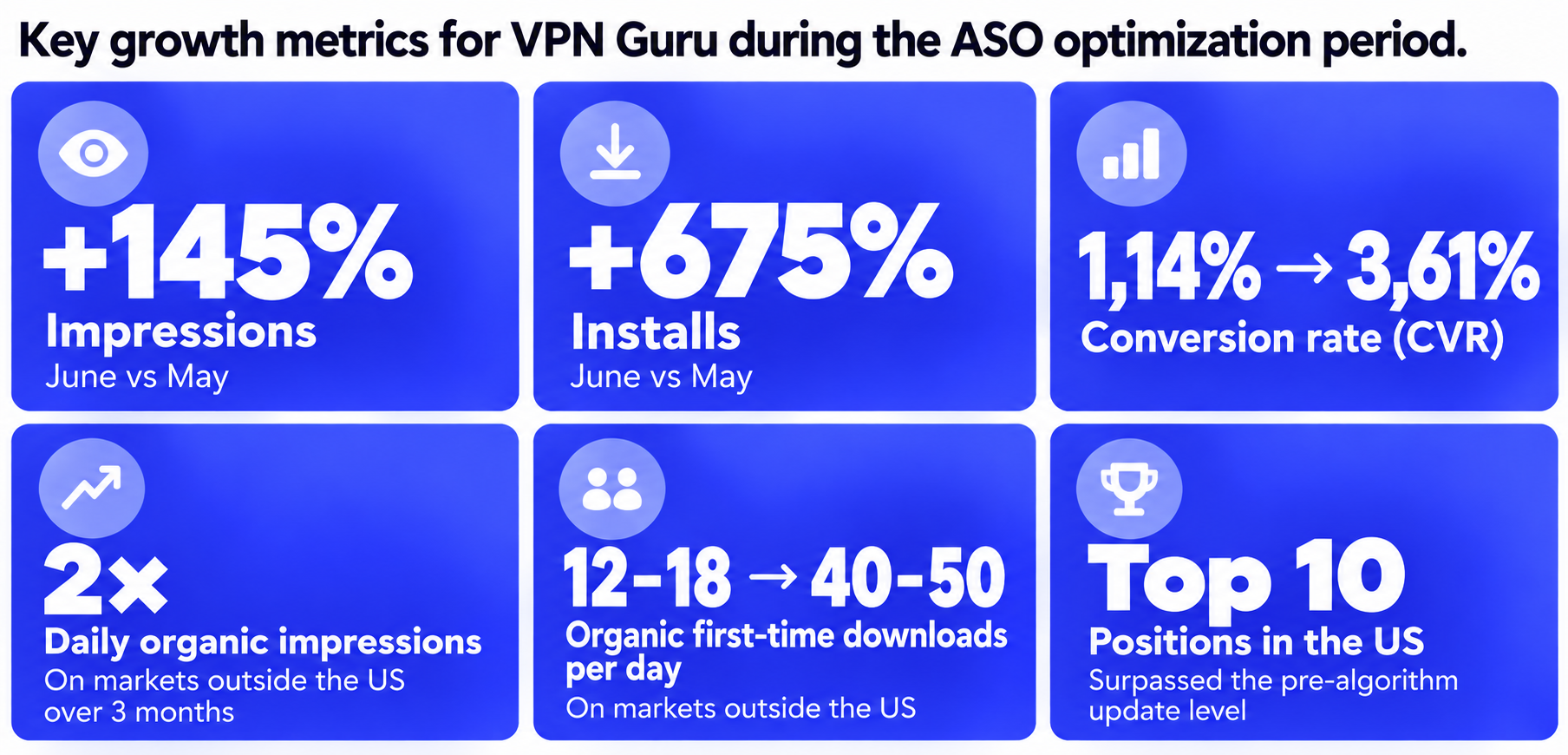
By early August, the number of keywords ranking in the Top 10 in the U.S. had exceeded the level recorded as of June 6. At the same time, the number of Top 50 rankings had not yet fully recovered. This indicates an improvement in the app’s presence among the highest search rankings, although further work on expanding keywords coverage remained a priority.
The VPN Guru case study demonstrates that increasing visibility in a competitive App Store category requires systematic work on keyword list , localizations, rankings, and conversion.