How We Doubled App Installs and Raised Our Client's App Rating to 4.9 in the App Store and Google Play: A Case Study in the Shopping Niche

Service:
Sector:
Author:
Published:
September 25, 2025
Team:
Liliia Kvyshko
ASO Specialist
Olha Hrek
ASO Team Lead

For fashion retailers, a mobile app is more than just another sales channel — it’s a familiar and convenient way to engage with their audience. However, even a strong brand can remain invisible without effective ASO.

In this case study, we share how we helped a multi-brand clothing and footwear retailer enhance its app visibility, nearly double organic installs, and raise its rating from 3.6 to 4.9 through optimization, seasonal campaigns, and targeted user communication.

"

About Our Partner

A multi-brand retailer of clothing, footwear, and accessories with both online and offline operations.

Cooperation Goals

The company has long been established in the Ukrainian market, but its mobile app had not reached the expected level of popularity. Since mobile apps are a key channel for fashion retailers, the partner chose to focus on promoting it in the App Store and Google Play.

Our goals:

  • Increase visibility in search results
  • Drive more app installs
  • Improve user ratings

Team Actions

We divided the work into several key steps to address everything from keyword optimization to performance evaluation and ratings:

  1. Competitor analysis and semantics collection
  2. Metadata optimization
  3. Results evaluation and new iterations
  4. App Rating Prompts strategy
  5. Seasonal communication

Step 1. Competitor Analysis and Semantics Collection

At the first stage, we identified relevant keywords ключевые слова and assessed their popularity. We also analyzed how competitors approach text optimization, focusing on three groups:

  • Ukrainian clothing, footwear, and accessory retailers.
  • Large marketplaces with a wide assortment of goods.
  • Foreign platforms popular among Ukrainians (e.g., Allegro, eobuwie.pl). Since 2022, these brand names have increasingly appeared in search terms in Ukraine.

Step 2. Metadata Optimization

Next, we prepared metadata for three locales indexed in Ukraine: English (UK), Ukrainian, and Russian, applying a tailored approach for each site.

In the App Store:

  • We placed the most popular and relevant keywords in the Title field.
  • We added keyword combinations that reinforce the Title in the Subtitle and Keywords fields.
  • We included competitor brand names and other target terms from the semantic core in the Keywords field.

In the Google Play:

  • We selected up to five phrases that accurately reflect the essence of the app.
  • We updated the App Name, Short Description, and Full Description, maintaining the required keyword density (three to five repetitions).
  • We used Google Natural Language to ensure the description was correctly identified as a Shopping category, achieving a Confidence score above 0.9

Step 3. Results Evaluation and New Iterations

In the App Store, we regularly updated metadata (once or twice a month) to test different combinations. We kept the ones that consistently placed the app in the top 10; as for those that turned out to be ineffective, we decided to replace them.

In Google Play, we set up Custom Store Listings for branded keywords and updated the description to target a broader range of search terms.

Step 4. App Rating Prompts Strategy

We proposed options for placing rating prompts in the app, taking two key factors into account:

  • Unobtrusiveness: It’s important not to overwhelm users with unnecessary push notifications.
  • Timing: The prompt should appear when users are most likely satisfied, for example, immediately after successfully placing an order.

Step 5. Seasonal Communication

Throughout the year, we adapted metadata and Custom Store Listings to align with seasonal events in the niche — from back-to-school and Halloween to Black Friday. This approach helped maintain relevance and reinforced the app’s position in search results.

Read how new screenshots and descriptions on Google Play increased conversion by +12.8% — COMFY Case Study.
Results of the Promotion

App Store

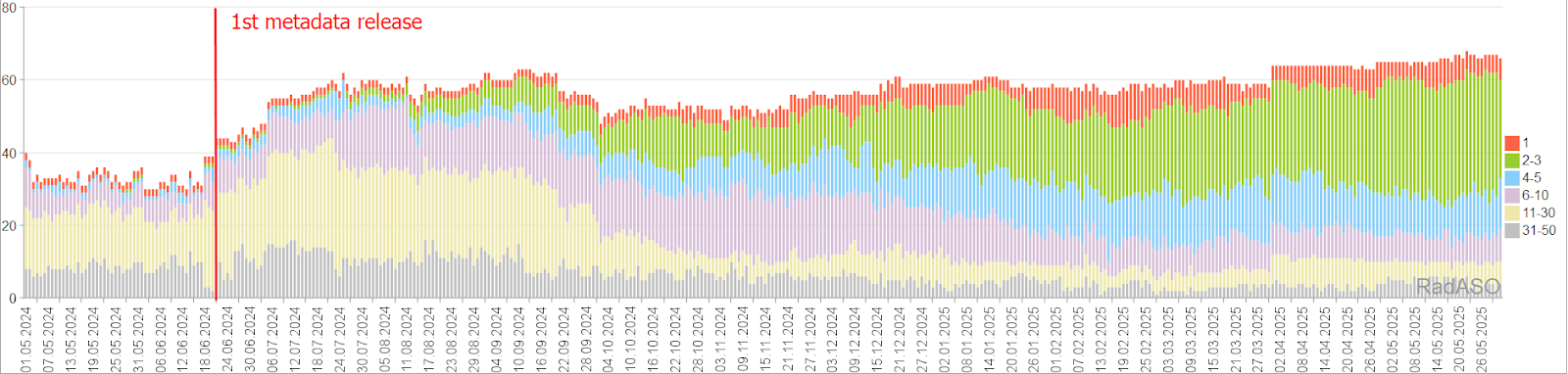
  1. The app started ranking in the top 50 for a greater number of popular search terms.
Increase in the number of keywords with SAP > 5 (Search Term Popularity indicator) for which the app ranks in the top 50
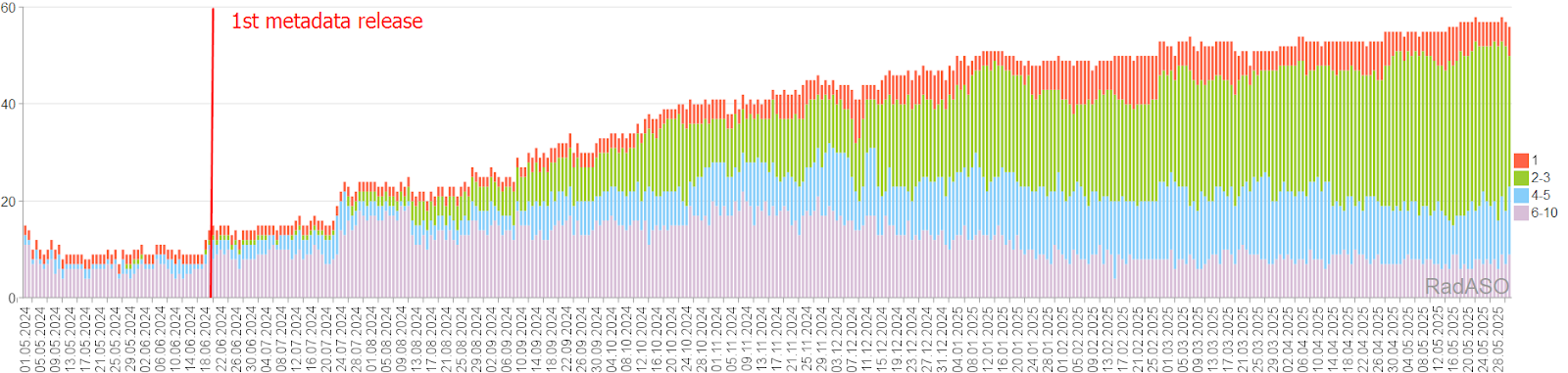
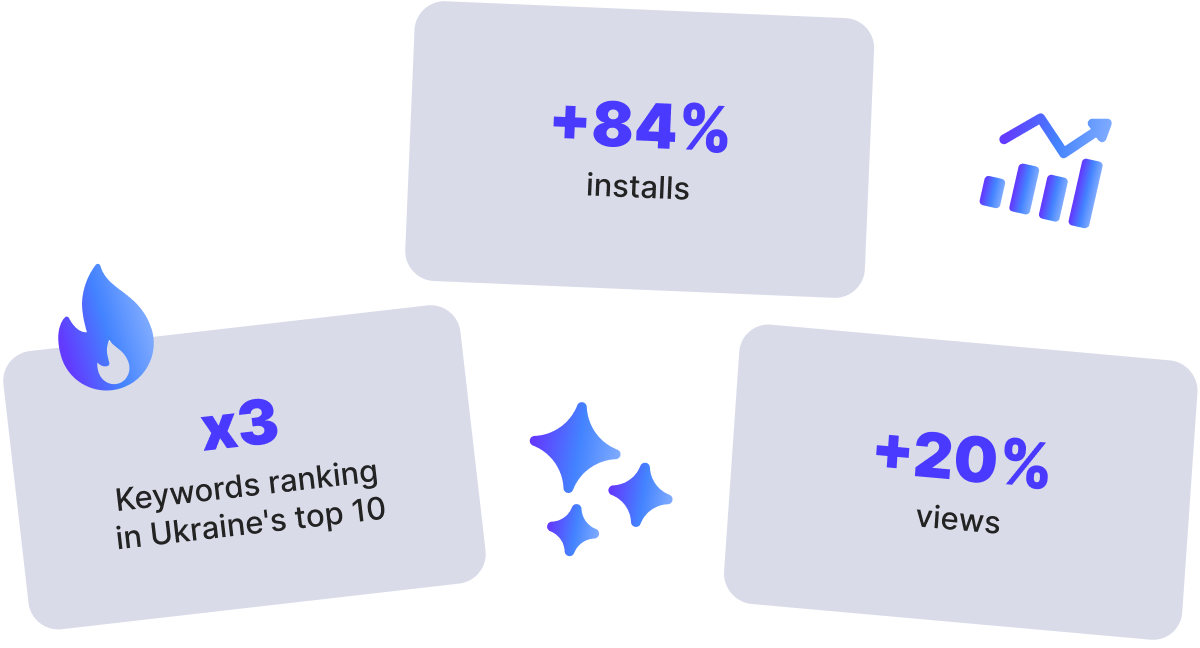
  1. The number of keywords ranking in the top 10 in Ukraine tripled over the year.
Trends in the number of keywords in the Top 10 in the App Store
Trends in the number of keywords in the Top 10 in the App Store
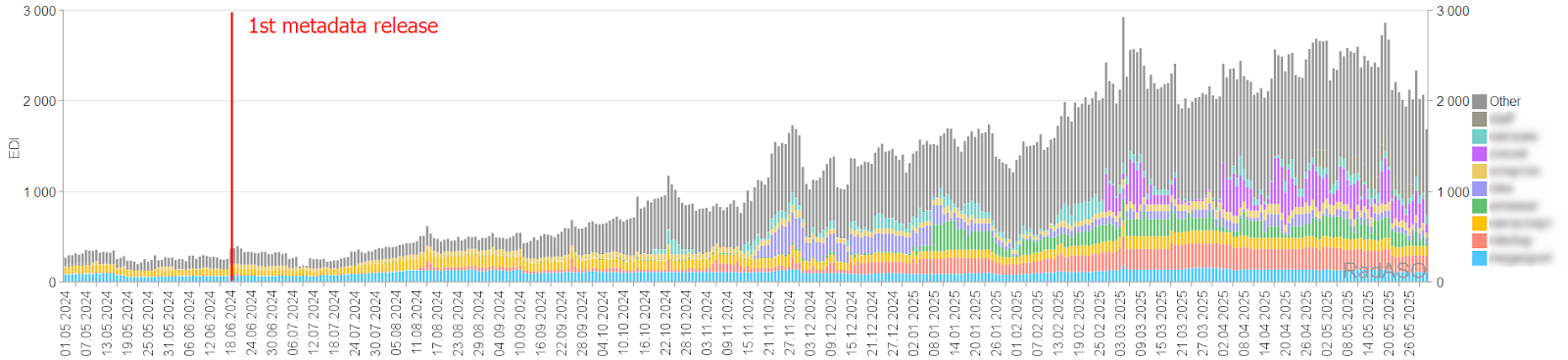
  1. The new search result positions generated approximately 2,000 additional daily impressions.
Growth in daily estimated impressions (EDI) for keywords
  1. Total impressions increased by 20% (excluding seasonal events), while installs surged by 84%.

Source type Impressions Installs
Apr. 2023 — Apr. 2024 May 2024 — May 2025 Growth, % Apr. 2023 —Apr. 2024 May 2024 —May 2025 Growth, %
App Store Search 236 914 285 041 0,2 16 765 30 927 0,84

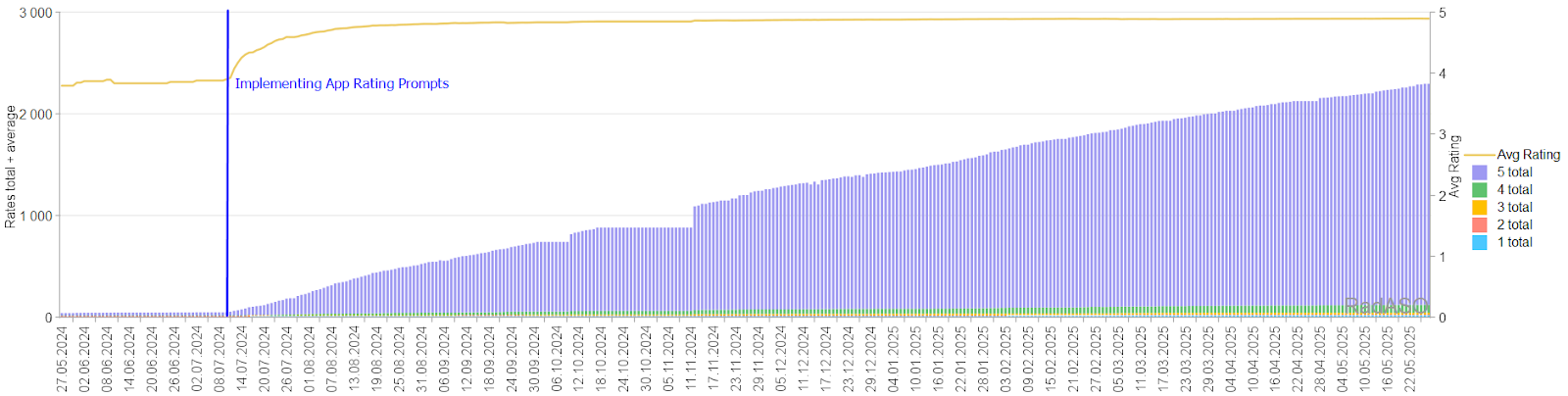
  1. Thanks to properly configured App Rating Prompts, the app’s rating in Ukraine increased from 3.8 to 4.9.
App Store rating change graph

Google Play

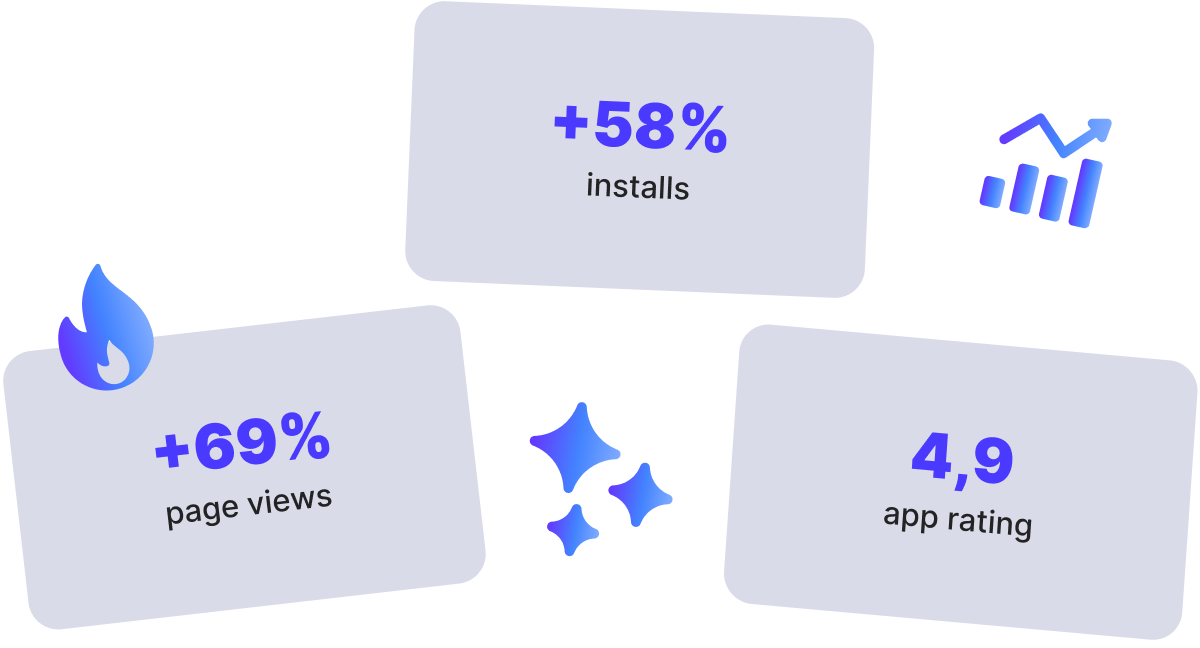
  1. Page views increased by 68.6%, while installs grew by 58.1%.

On Google Play, organic traffic comes from two main sources:

  • Google Play Search — branded search terms
  • Google Play Explore — all other keywords

We compiled the results in a table, presenting the dynamics for Google Play Search and Google Play Explore separately.
Source type Transitions to the app page App settings
Apr. 2023 — Apr. 2024 May 2024 — May 2025 Growth % Apr. 2023 — Apr. 2024 May 2024 — May 2025 Growth %
Google Play Search 13 017 19 772 0,519 10 500 14 735 0,403
Google Play Explore 5 247 11 028 1,102 2 154 5 266 1,445
Total 18 264 30 800 0,686 12 654 20 001 0,581

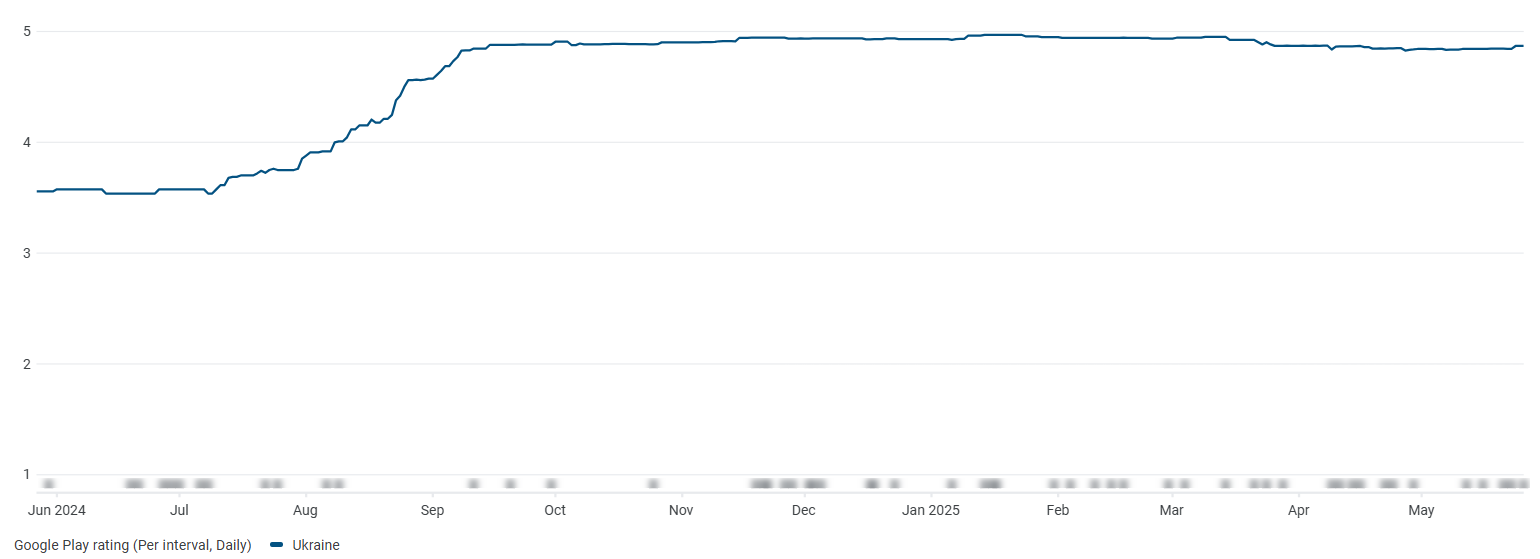
  1. The app's rating in Ukraine also increased from 3.6 to 4.9.
Graph illustrating changes in the app's rating on Google Play

What's Next?

Over the course of a year, the app has become more visible in search results, gained more downloads, and achieved steady growth. We continue to focus on its development by monitoring changes in demand, tracking new keywords, aligning with seasonal events, and testing visual elements — all aimed at strengthening our position and expanding the brand’s market share.

More Case Studies

Home
Up
Boost Your App
Please fill in the form below and we'll call you back in no time.
Your request has been received! We'll be in touch shortly
Oops! Something went wrong while submitting the form.