
Even in a niche market with a limited keyword pool and where organic growth is usually very slow, it is possible to dominate without an advertising budget.
In this case study, we show how a systematic ASO strategy helped our partner overcome these limitations through localization expansion and graphics updates. Read on for the details.
Aromoshelf is a mobile app for perfume enthusiasts that allows users to build their own personal fragrance collection, record scent impressions, and discover new scents through smart recommendations.
The partner approached us with the goal of scaling the product through ASO.
The main challenge was the app’s narrow niche and limited number of direct competitors, which significantly constrained the semantic core and complicated metadata preparation. The market lacked relevant generic keywords, and in the English (U.S.) locale, the initial semantic base effectively consisted of only three core terms: perfume, fragrance, and scent.
We defined three key objectives:
To scale Aromoshelf’s visibility and drive more organic installs, we built a step-by-step strategy:
At the initial stage, we analyzed competitors’ metadata structures, target keywords, screenshot design, and the countries generating the highest levels of organic traffic.
This analysis allowed us to identify growth opportunities and select priority markets for our partner.
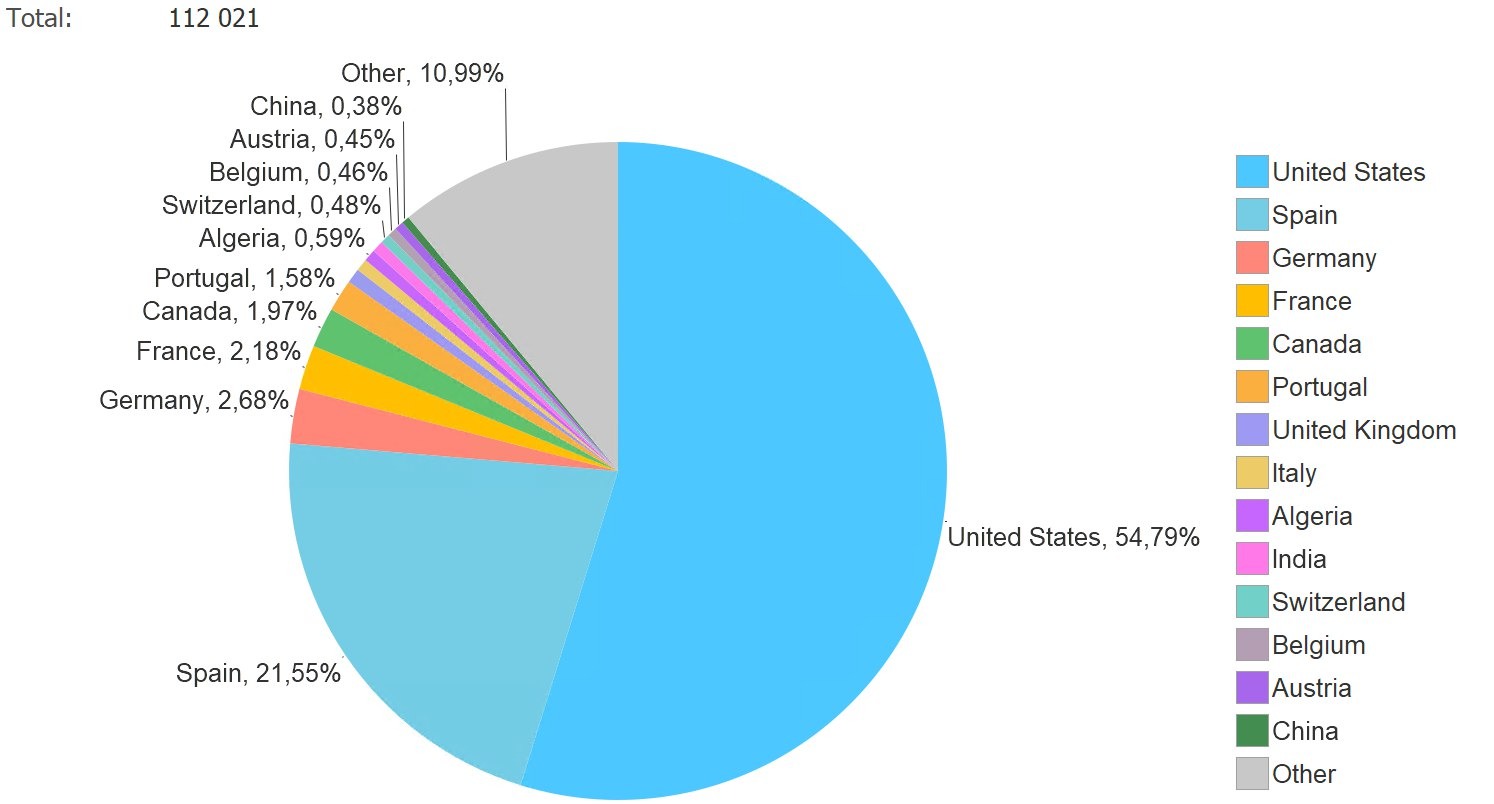
Initially, the Aromoshelf team planned to focus exclusively on the U.S. market. However, niche analysis revealed greater scaling potential, so we recommended expanding to additional regions.
As a result, we identified the TOP-3 priority markets: the United States, Spain, and Germany.
For the first iteration, we selected four locales indexed in the U.S.:
The full list of cross-locales is available via the link.
At the next stage, we built a comprehensive and high-quality semantic core.
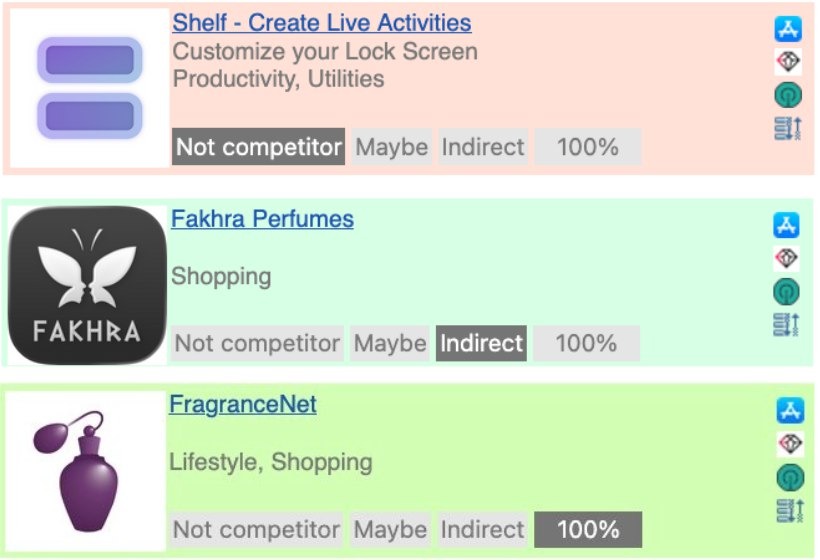
During the first three months, we also optimized the following locales: English (U.K.), French, German, Spanish (Spain), Arabic, Italian, Dutch, Portuguese, and Chinese (Simplified).
The selection of locales was based on niche analysis and the volume of organic traffic in specific countries.
After optimizing the metadata, we proceeded to improve the app page’s conversion rate.
We analyzed competitors’ visuals to identify common design patterns and assess the quality of their optimization. Additionally, we studied niche trends and target audience preferences to determine which messages and design styles most effectively influence install decisions.
Based on these insights, we formed a set of hypotheses to improve conversion, focusing on:
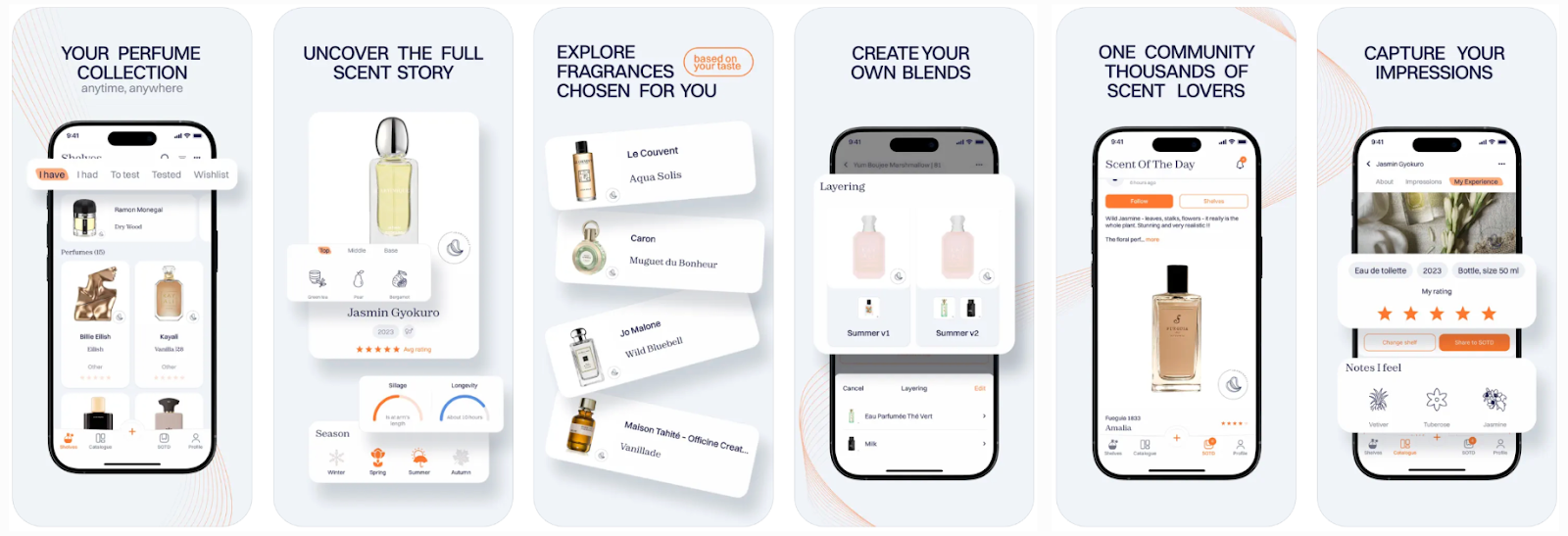
After presenting the hypotheses to the partner, we selected the strongest ideas for the first screenshot set. We focused on the app’s most valuable features, used simple and clear messaging, highlighted unique capabilities, and visually demonstrated how the app stands out from competitors.
Based on the approved hypotheses, we prepared a detailed design brief that included:
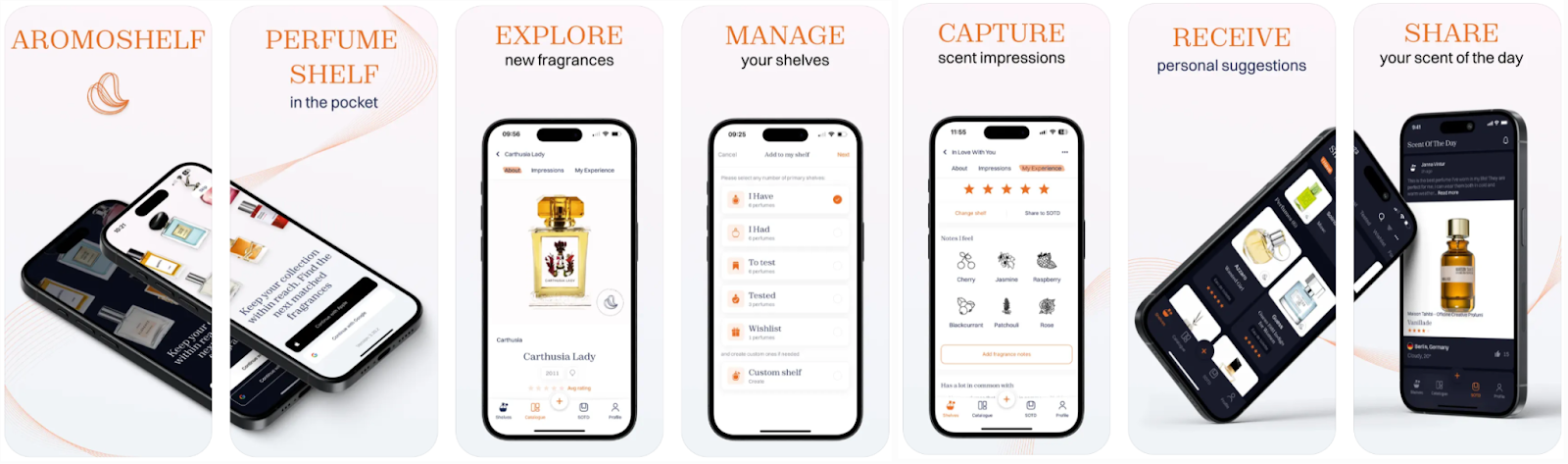
Initial screenshot set used as a baseline for updates:
Updated screenshot set:
After uploading the updated set, we began monitoring organic metrics—impressions, installs, and conversion rates—to assess the impact of the changes and define the next optimization steps.
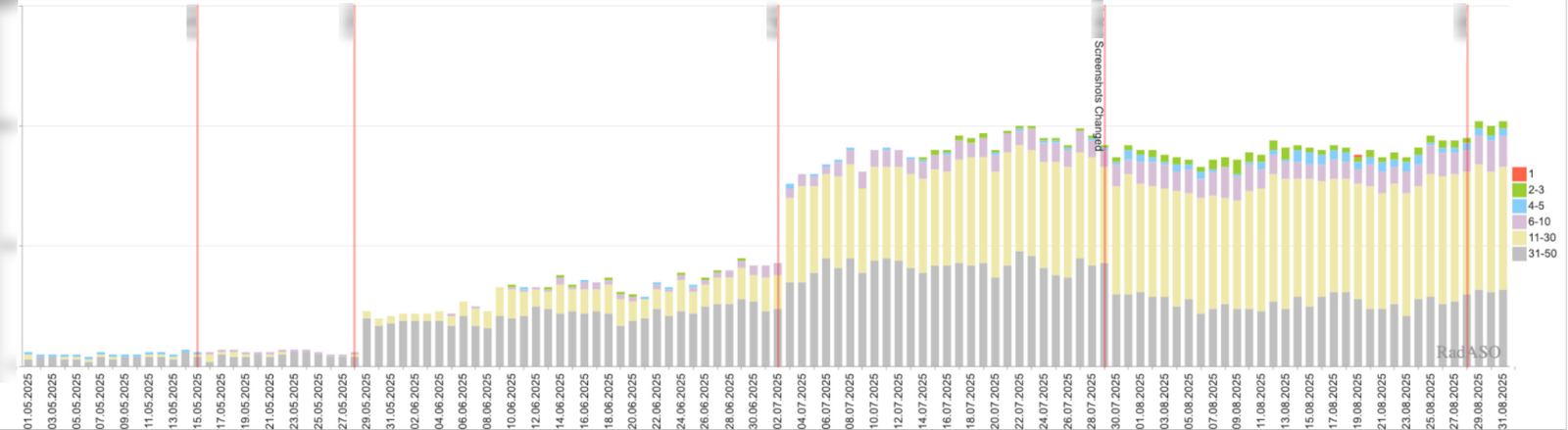
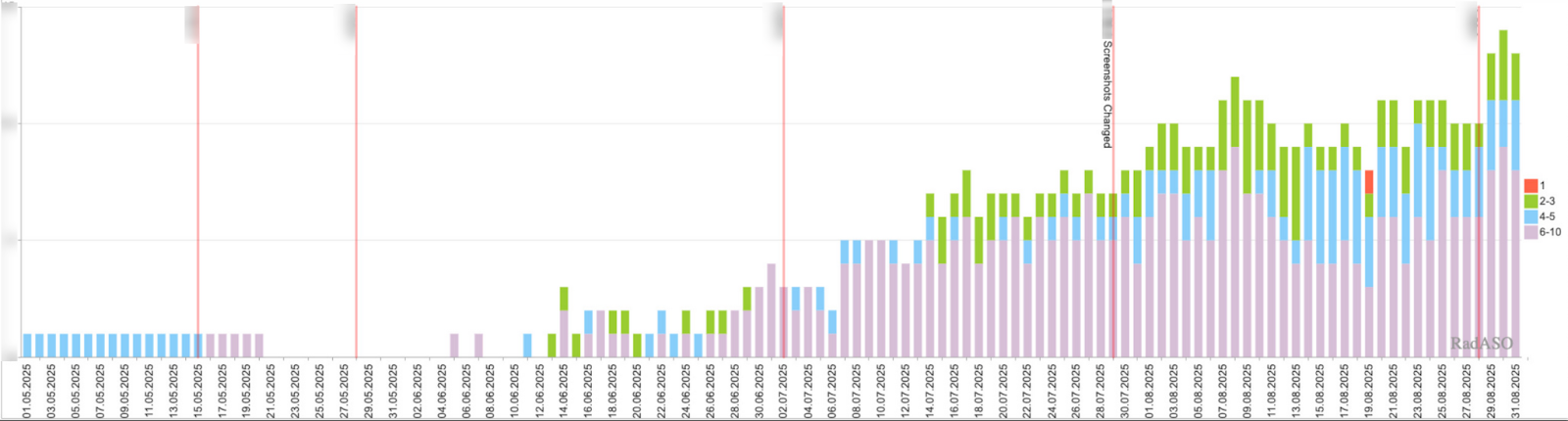
After optimizing metadata and scaling the number of locales available, the app’s search visibility began to grow steadily.
Dynamics of TOP-50 rankings across all countries:
Dynamics of TOP-10 rankings:
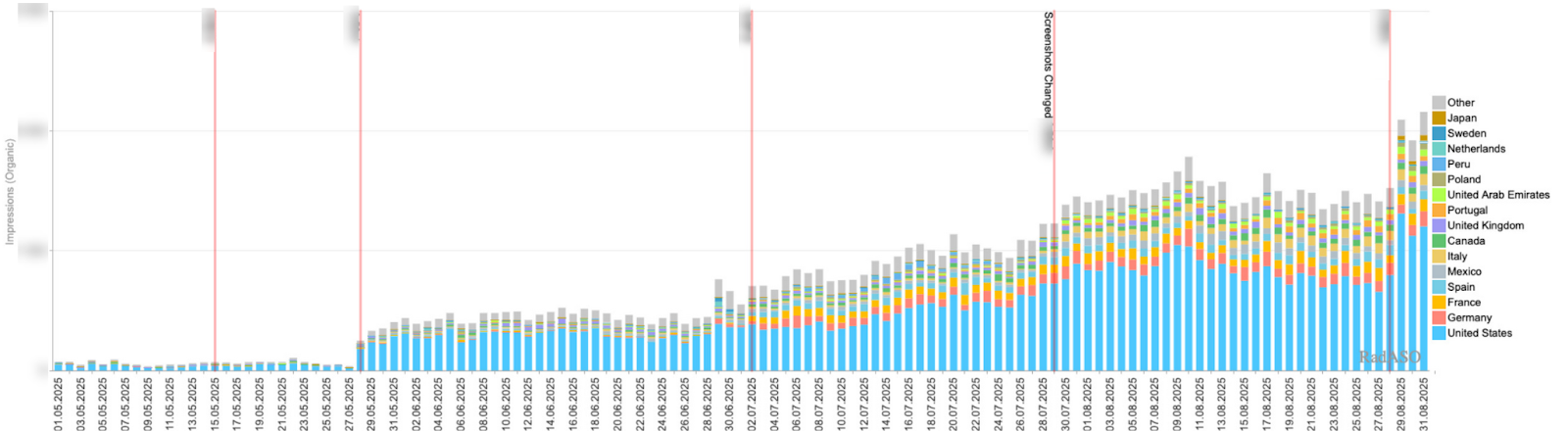
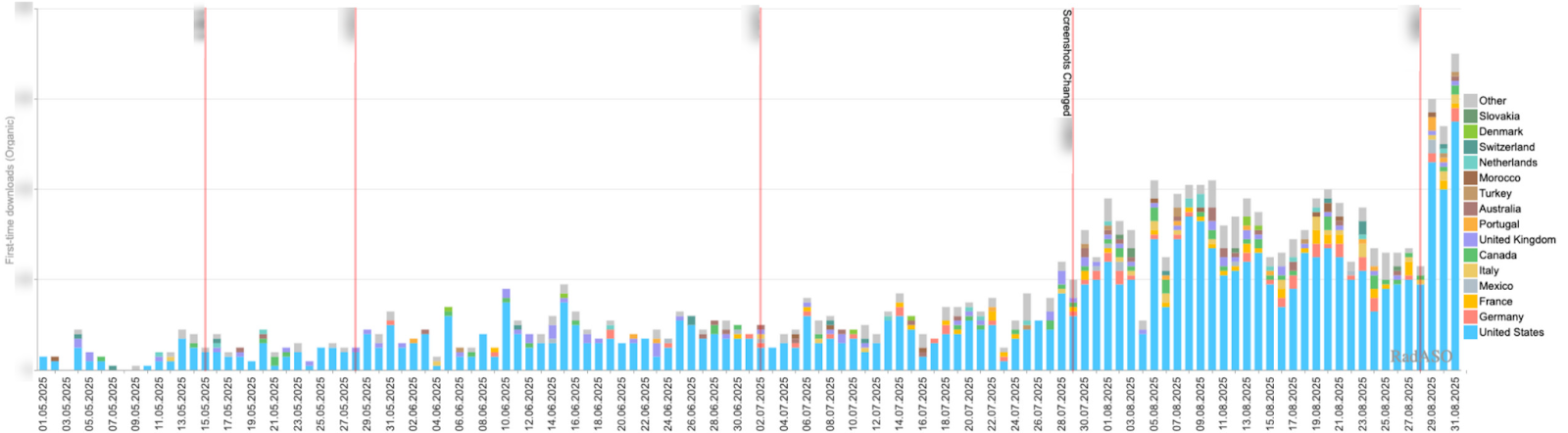
Improved visibility directly impacted organic impressions and installs.
Dynamics of organic impressions in target countries:
Dynamics of installs in target countries:
The updated screenshot set had a significant impact on user behavior.
Organic conversion dynamics after the screenshot update:
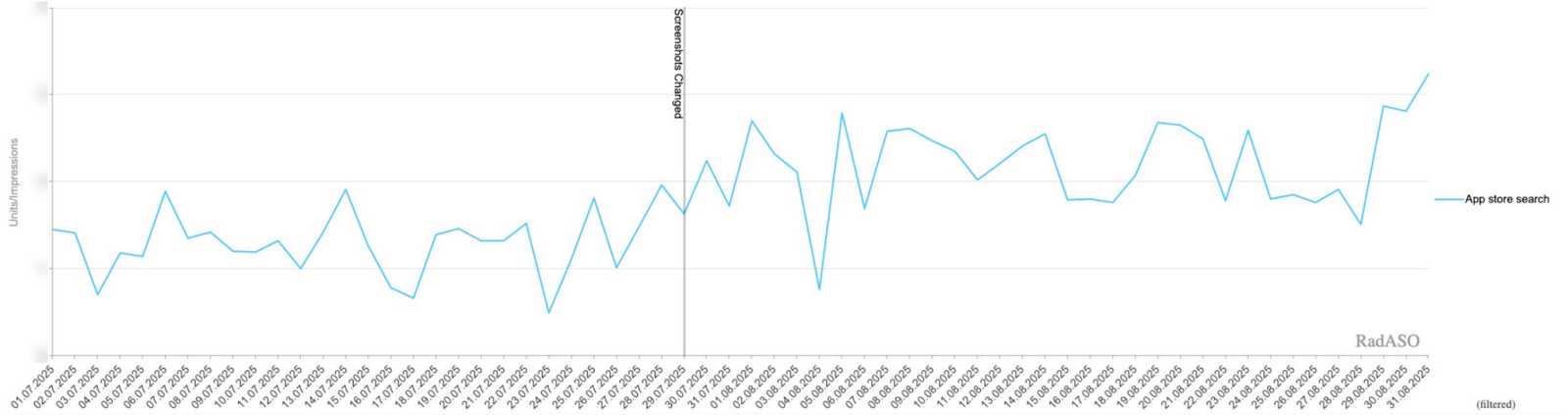
Comparison of App Store Search conversion one month before and after the update:
The increase was 1.10%.
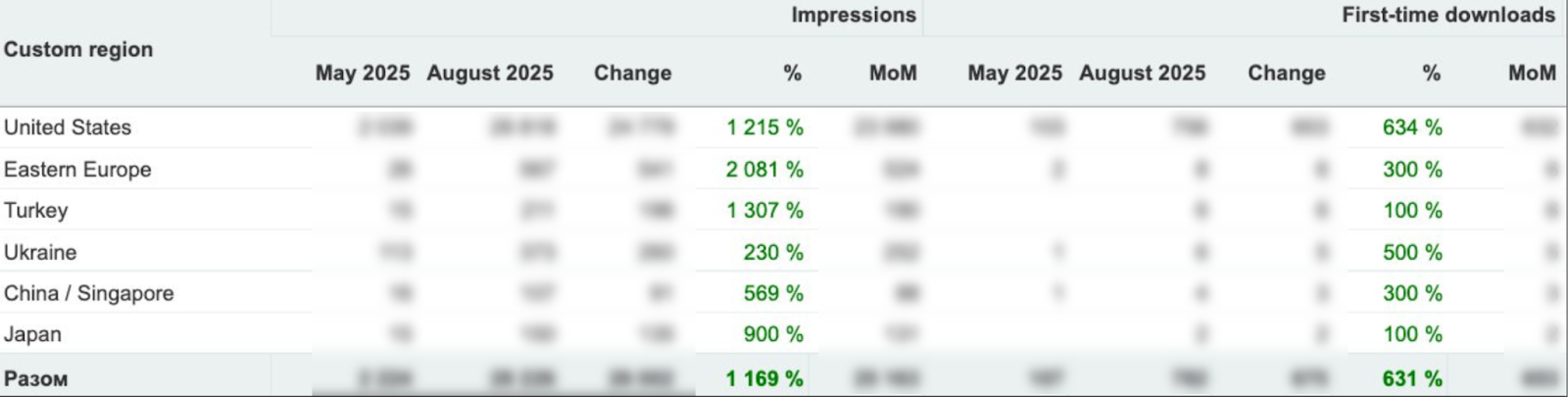
The combination of optimized metadata, expanded set of locales, and updated visuals drove consistent, stable growth.
Growth in organic impressions and downloads over the promotion quarter:





.avif)